Why the Roche Bioprocessing Summit Barcelona agenda matters for US B2B healthcare strategy
The Roche Bioprocessing Summit Barcelona agenda has become a reference point for senior US executives shaping biopharmaceutical event portfolios. Across its 15 sessions and 20 speakers over two intensive days, the summit concentrates advanced bioprocessing, cell therapy and gene therapy insights that US B2B organizers struggle to aggregate domestically. For professionals planning high value healthcare, medtech and pharma meetings in the United States, this concentrated European program now functions as a strategic benchmark rather than a distant curiosity.
At its core, the Roche Bioprocessing Summit Barcelona agenda is built around practical bioprocessing innovation, with a strong emphasis on process development, CMC strategy and therapy manufacturing for complex advanced biologicals. That structure mirrors the growing demand in US events for sessions that connect cell culture operations, cell line optimization and CMC decision making directly to commercial outcomes. When US planners study how Barcelona sequences topics from early cell development and gene engineering through to large scale production, they gain a template for more coherent learning journeys in American conferences.
The summit’s focus on single use technologies, continuous bioprocessing and digitalization also aligns tightly with US priorities in R&D and manufacturing transformation. American biotech clusters from Boston to San Diego are wrestling with the same questions about process intensification, regulatory expectations and data rich monitoring that Barcelona addresses head on. As one US vice president of technical operations who attended the 2024 edition noted after a session on “Scaling Up Cell and Gene Therapies with Modular Facilities,” “Barcelona compressed a year of internal benchmarking into two days.” As a result, the Roche Bioprocessing Summit Barcelona agenda is increasingly used by US vice president level leaders and global head roles as a yardstick for whether domestic events are keeping pace with international bioprocessing standards.
From Barcelona to Boston: translating bioprocessing agendas into US cell and gene therapy meetings
US based planners who serve cell therapy and gene therapy communities are mining the Roche Bioprocessing Summit Barcelona agenda for structural cues. They see how Barcelona balances foundational cell and gene science with applied engineering, manufacturing and regulatory sessions, then adapt that mix for American audiences that span university researchers, senior scientist profiles and regulatory scientist specialists. This translation work is reshaping how US programs integrate cell therapies content with broader biopharmaceutical strategy.
One clear lesson is the need to connect early stage drug discovery and R&D with downstream therapy production and CMC decision making in a single narrative arc. In Barcelona, sessions move logically from cell culture and cell line engineering through process development and digital bioprocessing, before landing on commercialization and regulatory perspectives. US events that previously siloed discovery, process and regulatory tracks are now experimenting with similar cross functional flows, especially in hubs like Philadelphia and the Bay Area.
Another emerging practice is to mirror Barcelona’s attention to career seniority and role clarity when designing American agendas. The Roche Bioprocessing Summit Barcelona agenda explicitly serves senior leaders, vice president roles, global head functions and hands on scientist or PhD level experts with differentiated content. In 2024, for example, a closed door leadership forum on “Global CMC Governance for Cell and Gene Therapies” ran in parallel with a technical workshop on “Advanced Process Analytical Technologies for Intensified Upstream Processing,” giving each cohort tailored depth. US organizers focused on patient access and market shaping, such as those analyzing why patient access themed healthcare events in the United States are evolving, now borrow this segmentation logic to ensure that cell therapy and gene therapy sessions deliver precise value to each attendee tier.
Designing US exhibit halls and networking formats inspired by the bioprocessing summit
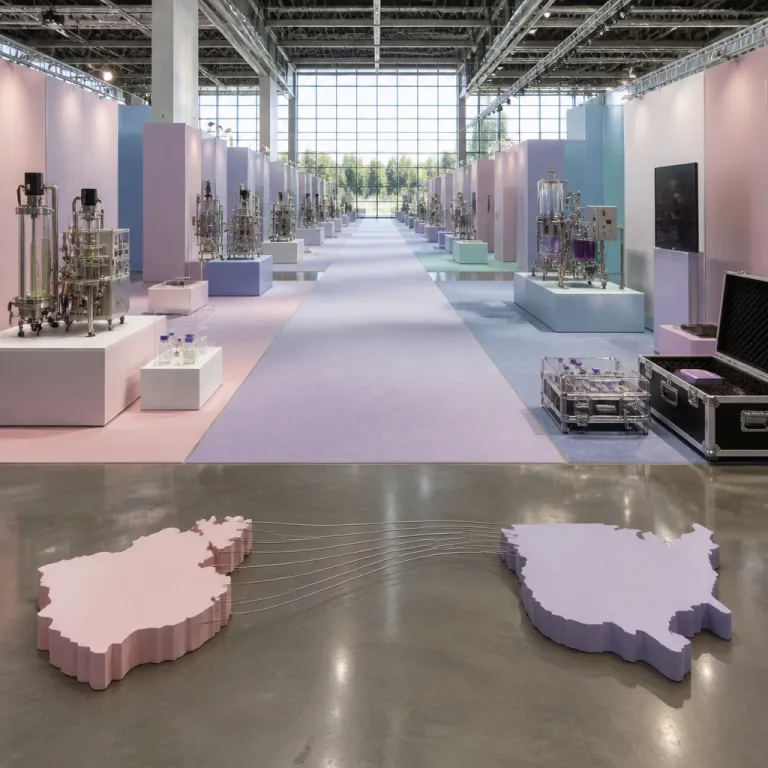
While the Roche Bioprocessing Summit Barcelona agenda is content dense, its physical layout and exhibit hall strategy also carry lessons for US B2B healthcare events. Exhibitors in Barcelona tend to cluster around bioprocessing technologies, single use systems, digital monitoring platforms and cell culture equipment, which creates a coherent marketplace for biopharmaceutical buyers. US organizers who study these patterns can redesign exhibit halls to align more tightly with process development workflows rather than generic product categories, improving bioprocessing exhibit hall design for both suppliers and buyers.
For example, a US oncology focused meeting can map exhibitor zones to the same lifecycle that Barcelona uses for advanced biologicals and cell therapies. That means grouping cell development tools, cell line engineering platforms, CMC services and consulting regulatory partners along a clear process path that mirrors therapy manufacturing reality. Organizers of strategy heavy oncology events already see how this approach complements insights from analyses of how major breast cancer conferences shape B2B oncology strategy in the United States.
Networking formats are evolving in parallel, with US events adopting Barcelona style curated roundtables that pair senior scientist roles, regulatory scientist experts and engineering leaders around specific process challenges. The Roche Bioprocessing Summit Barcelona agenda often embeds case studies on digitalization in bioprocess monitoring and implementation of single use bioreactors directly into these small group formats. In 2024, a roundtable on “Real Time Release for Viral Vector Manufacturing,” moderated by a senior CMC lead from Roche and a professor from a Barcelona university, used a concrete case where inline analytics cut batch release time by 30%. American planners now replicate this by placing cell therapy, gene therapy and cell and gene manufacturing case studies at the center of invite only discussions for vice president and global head participants.
Aligning US regulatory and CMC conversations with Barcelona’s bioprocessing depth
Regulatory expectations for cell therapies, gene therapy products and advanced biologicals are tightening in the United States, which makes the Roche Bioprocessing Summit Barcelona agenda especially relevant. Barcelona dedicates significant time to CMC strategy, late stage development and the interface between process development and regulatory science, giving regulatory scientist and consulting regulatory professionals a shared platform. US events that once treated regulation as an afterthought are now elevating it to a central pillar, mirroring the European model.
In practice, this means American conferences are building tracks that follow a therapy from early cell development and gene engineering through to commercial scale manufacturing and post approval lifecycle management. Sessions now routinely connect cell culture parameters, cell line stability and digital bioprocessing data with CMC submissions and ongoing regulatory commitments. A 2024 Barcelona session titled “Designing CMC Packages for Adaptive Clinical Programs,” for instance, walked through how a gene therapy sponsor linked process analytical technology data to comparability assessments across three manufacturing sites.
US based B2B organizers also recognize that regulatory dialogue must be accessible to both PhD level scientist attendees and senior business leaders. Borrowing from Barcelona, they pair technical talks on process analytical technologies and continuous bioprocessing with panels that feature vice president roles, global head functions and external consulting regulatory experts. This mix helps American biotech and biotechnology companies align internal R&D, engineering and manufacturing teams around a shared understanding of regulatory risk and opportunity.
Digitalization, AI and the future of US bioprocessing events
The Roche Bioprocessing Summit Barcelona agenda places digitalization and automation at the center of its bioprocessing narrative, which resonates strongly with US innovation agendas. Case studies on digital bioprocess monitoring, data rich process control and AI assisted optimization speak directly to American R&D and manufacturing leaders. As US events recalibrate, they increasingly treat digital bioprocessing as a horizontal theme that cuts across cell therapy, gene therapy and broader biopharmaceutical discussions.
Event technology strategy in the United States is evolving in parallel, influenced by consolidation among major platforms and changing attendee expectations. Organizers who analyze how Barcelona integrates digital poster halls, data driven matchmaking and virtual access are better prepared to interpret insights such as those shared in this analysis of fast consolidating event technology and platform decisions. The same mindset that values continuous bioprocessing and real time monitoring in manufacturing now drives demand for continuous data on attendee behavior and content performance.
Looking ahead, US B2B healthcare events are likely to mirror Barcelona’s emphasis on AI enabled decision support for process development and CMC planning. Programs will feature sessions where senior scientist roles, engineering leads and vice president level stakeholders jointly assess AI tools for cell culture optimization, cell line selection and therapy manufacturing scheduling. In that sense, the Roche Bioprocessing Summit Barcelona agenda 2026 and beyond is not only a content model but also a signal of how digital and physical infrastructures for bioprocessing summit formats will converge on both sides of the Atlantic.
Building transatlantic value for scientists, universities and industry leaders
The most durable impact of the Roche Bioprocessing Summit Barcelona agenda on US events lies in how it connects universities, industry and regulators. Barcelona attracts university based scientist and PhD researchers working on cell development, gene engineering and novel bioprocessing technologies, then places them alongside senior leaders from global biopharmaceutical companies. US organizers are now designing programs that intentionally replicate this mix, especially in regions where academic medical centers sit close to biotech clusters.
For early career researchers in the United States, exposure to Barcelona style content on cell therapy, gene therapy and advanced biologicals provides a roadmap for industry relevant skills. Sessions that trace a line from fundamental cell culture science through process development and CMC decision making help them understand how their work fits into therapy manufacturing realities. When these researchers attend American events shaped by the Roche Bioprocessing Summit Barcelona agenda, they encounter clearer pathways into roles such as senior scientist, regulatory scientist or consulting regulatory specialist.
Industry leaders benefit as well, because transatlantic alignment reduces duplication and accelerates learning cycles across bioprocessing summit ecosystems. A vice president or global head who attends Barcelona can return to the United States with concrete expectations for how domestic events should handle topics like continuous bioprocessing, digital monitoring and cell and gene manufacturing. Over time, this feedback loop is likely to raise the baseline quality of US B2B healthcare, medtech and pharma events, ensuring that agendas remain tightly coupled to the real process, engineering and regulatory challenges that define modern biopharmaceutical manufacturing.
Key figures shaping the Roche Bioprocessing Summit Barcelona agenda and US event strategy
- The Roche Bioprocessing Summit in Barcelona typically runs over 2 days, which concentrates learning for US attendees who must justify international travel with dense, high impact programming (source: Roche Bioprocessing Summit Barcelona official agenda, 2024 edition).
- Around 15 sessions are structured to cover the full bioprocessing lifecycle, giving US organizers a clear template for balancing cell development, process development, CMC and manufacturing content (source: Roche Bioprocessing Summit Barcelona program PDF, 2024).
- Approximately 20 speakers contribute to the program, allowing a mix of university researchers, senior scientist roles and industry executives that US events increasingly seek to emulate (source: Roche Bioprocessing Summit Barcelona speaker list, 2024).
- Case studies on single use bioreactors presented at the summit report measurable reductions in contamination risk and increased flexibility, with several sponsors citing double digit percentage cuts in cleaning validation time, which US manufacturers use as reference points when evaluating capital investments (source: Roche Bioprocessing Summit Barcelona proceedings and session summaries).
- Sessions dedicated to digitalization in bioprocess monitoring highlight efficiency gains from real time data integration, including examples where automated alerts reduced deviation investigation time by up to 25%, reinforcing the business case for AI and automation in US biopharmaceutical plants (source: annual bioprocessing trends and digitalization reports cited during plenary discussions).
FAQ: Roche Bioprocessing Summit Barcelona agenda and US B2B healthcare events
How does the Roche Bioprocessing Summit Barcelona agenda influence US event programming ?
US organizers use the Roche Bioprocessing Summit Barcelona agenda as a benchmark for structuring content around cell therapy, gene therapy, process development and CMC topics. By mirroring its lifecycle approach from early R&D to manufacturing, American events create more coherent learning paths for scientists, engineers and senior executives. This alignment helps ensure that US programs remain competitive with leading European bioprocessing summit formats.
Why is CMC and regulatory content from Barcelona relevant to US professionals ?
Regulatory expectations for advanced biologicals, cell therapies and gene therapy products are converging across major markets, including the United States. The Roche Bioprocessing Summit Barcelona agenda dedicates substantial time to CMC manufacturing, regulatory science and consulting regulatory perspectives, which offers US attendees practical frameworks they can adapt. As a result, American conferences increasingly integrate similar sessions to help regulatory scientist roles and business leaders manage global compliance.
What types of professionals benefit most from attending both Barcelona and US events ?
Professionals who span science, engineering and strategy gain the most from this transatlantic event ecosystem. Senior scientist profiles, PhD level researchers, process development engineers, vice president roles and global head functions all use the Roche Bioprocessing Summit Barcelona agenda to calibrate their expectations for US events. This cross pollination strengthens collaboration between universities, biotech companies and large biopharmaceutical manufacturers.
How can US event planners practically apply lessons from the Barcelona agenda ?
US planners can start by mapping their programs to the same lifecycle that structures the Roche Bioprocessing Summit Barcelona agenda, from cell development and gene engineering through to therapy manufacturing and commercialization. They can redesign exhibit halls around process stages, elevate digitalization and continuous bioprocessing as horizontal themes and segment content by seniority. These steps make American events more relevant to both hands on scientist attendees and senior decision makers.
What future trends highlighted in Barcelona should US organizers track closely ?
Key trends include wider adoption of single use technologies, expansion of continuous bioprocessing and deeper integration of AI into process monitoring and control. The Roche Bioprocessing Summit Barcelona agenda also points to growing emphasis on data rich CMC strategies and closer collaboration between regulatory scientist experts and manufacturing leaders. US organizers who track these themes can position their events at the forefront of global bioprocessing innovation.
