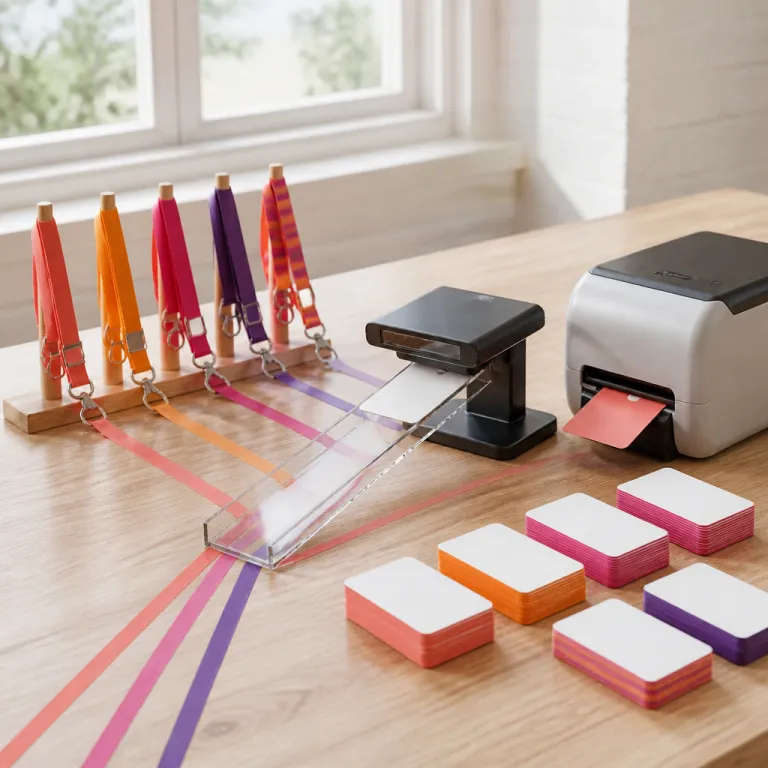
The fragmentation problem in multi event CRM workflow B2B pipeline strategy
For B2B exhibitors in the United States, the real friction rarely happens on the show floor. It starts once badge scans from CES in Las Vegas, RSA Conference in San Francisco, and SXSW in Austin land in different systems and fracture what should be a single, event driven CRM pipeline. When every event provider exports its own spreadsheet format, your pipeline management discipline erodes and the sales funnel becomes a patchwork of partial views instead of one coherent revenue narrative.
Most sales teams still juggle separate lead capture portals, ad hoc CSV files, and one off CRM integration projects for each show. That fragmentation creates duplicate contact records, inconsistent lead scoring rules, and broken sales automation sequences that never reflect the full sales process across events. The result is that your sales marketing follow up becomes event specific rather than account centric, and your best sales opportunities stall because no one sees the complete history of interactions across the entire platform ecosystem.
Internal benchmarks from North American exhibitors commonly show around 150–250 leads per event, which means that a program of five to eight shows can easily generate more than one thousand contacts that must be routed into the right pipeline. When those leads are scattered across different tools and management software instances, your team spends more time cleaning data than trying to manage sales conversations. A multi show CRM workflow treats every badge scan as one more step in a continuous B2B pipeline, with shared tracking rules, shared key features, and shared automation logic that apply regardless of city, venue, or organizer.
Unified ingestion: standardizing badge scan data into one CRM platform
The first structural move is to design a unified ingestion layer that normalizes badge scan data from all trade shows into a single CRM platform format. Mobile badge scanning applications such as those used at large US conferences already support real time export, but without a standard template your CRM integration work becomes a custom project for every event. A scalable multi event CRM workflow B2B pipeline requires one canonical schema for every lead, every contact, and every deal stage, regardless of whether the source is a New York fintech conference or a Chicago manufacturing expo.
Leading exhibitors now define a common set of fields that every badge scan must populate before it can enter the CRM, including event name, session attended, product interest, and consent for email marketing. They then use middleware tools or native CRM integration connectors to map each provider’s export into that schema, so that sales teams always see consistent data and can rely on automation rules that behave the same way across events. This unified approach also makes it far easier to apply marketing automation and multi channel nurture programs that reference event conversations without rebuilding workflows for each show.
As a practical example, a typical ingestion schema might include fields such as: contact name, job title, company, industry, event name, interaction type (booth visit, demo, meeting), product interest tags, buying role, time frame, consent status, and free form notes. In a BoothLeads style CSV, a column labeled “Event_Title” would map to your canonical “Event Name” field, “Lead_Notes” would map to “Conversation Notes,” and “Interest_Codes” would populate “Product Interest Tags.” Once this structure is in place, a single import template can handle exports from CES, RSA Conference, and regional shows without additional engineering work. Industry case studies and vendor reported benchmarks consistently indicate that when companies implement a unified CRM workflow across multiple trade shows, lead conversion rates can improve by roughly ten to twenty percent and follow up speed increases materially because routing is automated and data quality is higher.
Attribution mapping and event aware lead scoring across the sales pipeline
Once ingestion is standardized, the next challenge is attribution mapping that respects the complexity of B2B buying journeys across multiple events. In a mature multi event CRM workflow B2B pipeline, every contact record carries structured tags for event source, interaction type, and engagement intensity, so that sales teams can see whether a prospect first engaged at RSA Conference and then deepened interest at a smaller regional show. This level of tracking allows your team to prioritize follow up based on cumulative activity rather than isolated scans.
Effective lead scoring in this context must treat events as one continuous channel, not as separate campaigns that compete for credit. A prospect who attended a product demo at CES, joined a roundtable at SXSW, and booked a meeting at a Boston industry conference should automatically move to a higher deal stage because the CRM can see the full pattern of engagement. To achieve this, management software needs clear key features such as multi event tags, weighted scoring for different interaction types, and real time updates when new badge scans arrive from any integrated platform.
Consider a simple scoring model: a booth visit might be worth five points, a scheduled demo fifteen points, and an in person meeting twenty five points, with thresholds that automatically promote a contact from marketing qualified to sales qualified status. Account based teams can then orchestrate sales marketing plays that span several shows in a single quarter, aligning outbound email, targeted ads, and executive outreach around the same named accounts. Strategic guides on account based event marketing across multiple trade shows show how this approach turns fragmented event activity into a coherent sales process. When attribution mapping is executed well, your best sales opportunities receive consistent attention, while lower quality leads generated from casual badge scans are nurtured through marketing automation instead of clogging the active sales pipeline.
Designing post event follow up sequences that scale across shows
Unified data only creates value when it powers disciplined post event activation that respects both buyer context and sales capacity. In a robust multi event CRM workflow B2B pipeline, follow up sequences are event agnostic but conversation specific, meaning that the same automation framework can reference a CES demo or a Chicago workshop simply by inserting the right event tokens. This structure lets your team maintain consistent pipeline management while still delivering personalized outreach that feels tailored to each interaction.
High performing sales teams typically combine automated email cadences with human touchpoints triggered by lead scoring thresholds, using CRM integration to surface the right talking points from notes captured in mobile badge scanning tools. A standard sequence might start with a same day email summarizing the discussion, followed by a multi channel mix of LinkedIn touches, phone calls, and targeted content offers over the next two weeks. Sales automation rules can pause or accelerate this journey based on real time engagement signals such as email opens, content downloads, or meeting bookings, ensuring that the sales process adapts to each contact’s behavior.
To keep this scalable across five or more trade shows, many organizations rely on drag and drop workflow builders inside platforms like HubSpot CRM or similar management software, where marketing automation and sales automation steps can be reused across events. These tools allow marketing and sales teams to manage sales tasks, assign ownership, and track deal progression without rebuilding logic for every show. A simple before and after comparison often clarifies the impact: before standardization, teams may wait several days to upload spreadsheets and manually assign leads; after implementing reusable workflows, most follow up begins within hours and is automatically tailored by event, segment, and engagement score. For a deeper operational playbook on how the best trade show teams structure their booth activity and follow up, many executives now consult analyses on what the best trade show teams are doing differently to align on shared pipeline goals.
Technology stack, ROI, and governance for a unified event driven pipeline
Behind every effective multi event CRM workflow B2B pipeline sits a deliberate technology stack that balances flexibility with governance. At the core is a CRM platform, often HubSpot CRM or a comparable system, configured with clear pipeline stages, standardized fields, and automation rules that treat events as a primary lead generation source. Around that core, exhibitors deploy specialized tools for universal lead capture, AI enrichment, and marketing automation that are tightly connected through robust CRM integration.
Vendors such as BoothLeads, Reach, and snapAddy have demonstrated through customer case studies that AI powered lead capture and mobile badge scanning can significantly reduce manual data entry errors and accelerate follow up times. Publicly shared examples from these providers describe unified CRM workflows that lift lead conversion rates by an estimated fifteen to twenty percent and shorten lead processing time by roughly twenty to thirty percent for exhibitors that previously relied on manual entry. These figures are typically vendor reported or based on internal customer benchmarks rather than independent academic studies, but they align with broader industry experience. When sales teams respond in real time or within hours instead of days, response rates climb, and the overall ROI of the event program improves without increasing booth footprint or sponsorship spend.
From a financial perspective, many platforms are billed annually, which encourages organizations to standardize on one management software stack rather than experimenting with new tools at every show. Governance then becomes a question of defining key features that every new tool must support, such as secure data handling, reliable tracking, and seamless CRM integration that does not break existing sales automation flows. When you read article level analyses of event technology, the consistent theme is that the best sales organizations treat their sales pipeline as a long term asset, investing in software, processes, and cross functional collaboration so that every badge scan, from any trade show, strengthens one unified contact graph and one coherent pipeline.
Operating model: aligning teams, processes, and metrics around one pipeline
Technology alone will not fix a fragmented event program unless the operating model aligns marketing, sales, and revenue operations around a single view of the pipeline. In a mature multi event CRM workflow B2B pipeline, the marketing team owns lead generation targets by event, while sales teams commit to response time and conversion metrics that apply across all shows. Revenue operations then steers pipeline management by defining data standards, automation rules, and reporting structures that span the entire sales pipeline rather than individual campaigns.
Practical governance starts with a shared playbook that documents how to manage sales activities before, during, and after each trade show, including clear roles for booth staff, SDRs, and account executives. That playbook should specify how to use mobile tools on site, how to capture contact context, and how to tag every lead so that post event workflows can route them correctly through marketing automation and sales automation sequences. Regular pipeline reviews then focus on cross event performance, comparing conversion rates and deal velocity for leads generated at different shows but processed through the same management software framework.
As AI and mobile technologies continue to evolve, exhibitors that treat events as one continuous channel rather than isolated campaigns will maintain a structural advantage. Unified data, consistent tracking, and disciplined follow up allow teams to identify which events generate the most qualified opportunities and the strongest long term loyalty. Over time, this operating model turns your event calendar into a predictable revenue engine, where every badge scan feeds a single, well governed contact database and a clearly defined multi event CRM workflow B2B pipeline.
FAQ: multi show CRM workflows and unified event pipelines
How does a multi show CRM workflow improve post event follow up speed ?
A multi show CRM workflow centralizes badge scans from all trade shows into one standardized CRM import, which removes manual consolidation work and accelerates routing. With unified fields and automation rules, leads are assigned to the right sales team in real time, and follow up sequences trigger automatically based on event tags and engagement scores. Exhibitors that adopt this model often report follow up response times that are thirty to forty percent faster compared with fragmented, event specific processes, based on internal time tracking and vendor benchmark studies.
What data fields should be standardized across all event badge scans ?
At minimum, exhibitors should standardize fields for contact identity, company profile, event name, interaction type, product interest, consent status, and lead source details. Many organizations also include fields for buying role, time frame, and notes on specific pain points captured during conversations, which support more accurate lead scoring. When every event provider maps into this schema, the sales pipeline view remains consistent, and reporting on event performance becomes far more reliable.
Which technologies are most critical for unifying event data into one pipeline ?
The essential components are a configurable CRM platform, universal lead capture tools that support mobile badge scanning, and middleware or native connectors for CRM integration. AI enrichment services help complete company and contact profiles, while marketing automation systems orchestrate multi channel nurture journeys that reference event interactions. Together, these technologies create a seamless flow from badge scan to qualified opportunity, without repeated manual imports or spreadsheet manipulation.
How should teams measure the ROI of a unified multi event pipeline ?
Teams should track metrics such as lead conversion rate by event, average response time, opportunity creation rate, and revenue influenced by event sourced contacts. Comparing these KPIs before and after implementing a unified workflow reveals the impact of better data quality and faster follow up on the sales process. Over time, this analysis also shows which trade shows contribute the highest value opportunities, guiding future budget allocation and booth strategy.
How many events justify investing in a multi show CRM workflow ?
Any exhibitor attending more than three significant trade shows per year will benefit from a unified workflow, because manual consolidation quickly becomes a bottleneck at higher lead volumes. For programs with five to eight events, the operational risk of fragmented data and inconsistent follow up is substantial, making a multi event CRM workflow B2B pipeline almost mandatory. The investment in integration and governance is typically offset by higher conversion rates and more efficient use of sales resources.