From badge scanning to intent signals: redefining the event lead
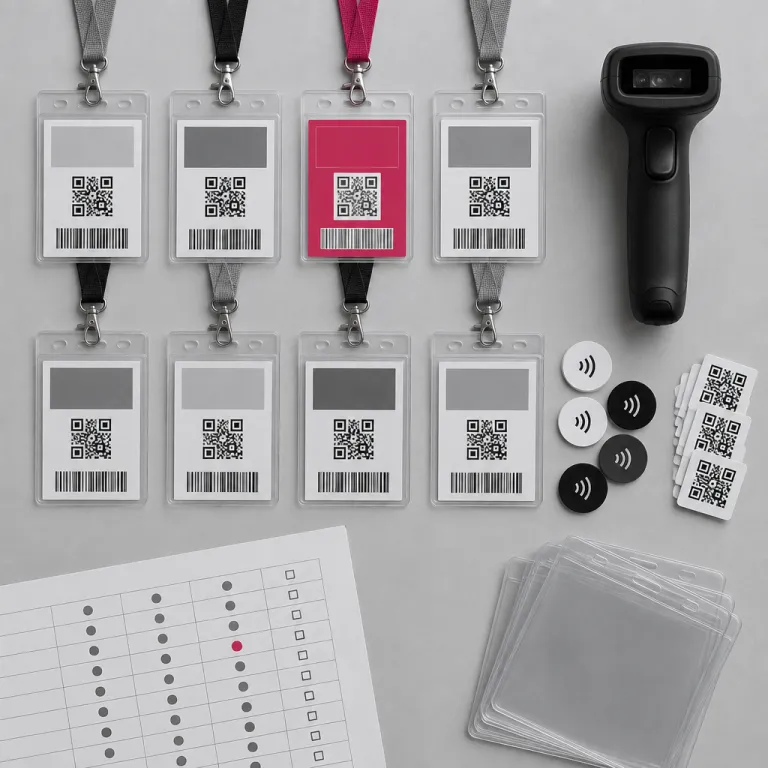
At major U.S. trade show events like CES in Las Vegas, the old playbook of counting every badge scan as a qualified lead is collapsing fast. AI driven lead capture and buyer intent modeling for the 2026 trade show season is becoming shorthand among senior marketers for a shift from raw badge volume toward intent based qualification, where each event lead is scored on behavior before a sales team even starts a conversation. Exhibitors who still celebrate piles of business cards and unfiltered contacts will see their pipeline quality fall behind competitors using AI enriched lead data and structured lead retrieval.
AI matchmaking platforms embedded in event apps now surface granular data about attendees long before they reach your booth. At RSA Conference in San Francisco, for example, exhibitors can see which sessions a prospect attended, which topics they bookmarked in the show app, and which other booths they favorited, turning each badge scan into a context rich signal rather than a cold capture. That means the same badge scanning action that once produced anonymous show lead counts now feeds real time lead scoring models that rank leads by buyer readiness and potential deal size.
Cvent recently announced that it shipped 34 net new AI features across the event lifecycle in July, processing 12.7 billion attendee interactions across registration, session engagement, and exhibitor touchpoints (Cvent, “Cvent Unveils New AI-Powered Event Technology,” July 2024). For a B2B exhibitor, that scale of event data means AI can correlate booth traffic patterns, content consumption, and meeting requests to predict which leads are most likely to convert into sales within a defined time window. Instead of asking “How many leads did we capture at the trade show?” the sharper question becomes “How many high intent leads did our capture software and CRM integrations surface for our sales teams to pursue this quarter?”.
This evolution changes the definition of lead capture at a U.S. trade show from a mechanical badge scan to a dynamic, AI based interpretation of behavior across the entire event. A single event lead is now enriched with information from session attendance, retrieval app interactions, and even dwell time at your booth, which together inform lead qualification before any human follow up sequence begins. For small business exhibitors, this is not theoretical; AI driven lead retrieval tools now bundle badge scanning, business card OCR, and real time lead scoring into affordable capture software that plugs directly into cloud CRM systems.
Hybrid capture methods are proving especially powerful in this AI enhanced trade show environment, because they combine the speed of badge scanning with the nuance of human notes and digital forms. When your team uses a retrieval app that supports badge scans, manual note taking, and QR based content capture, every conversation at the booth becomes structured data for AI models to analyze. That structure allows AI to distinguish between a student collecting swag and a director level buyer who asked three pricing questions, even if both generated identical show lead counts in the past.
For IT and cybersecurity decision makers walking the floor at Black Hat in Las Vegas, this means their digital footprint across the event is now part of the sales conversation before they ever meet a vendor. Every click in the event app, every session check in, and every booth visit becomes lead data that informs how sales teams prioritize follow up and how marketing evaluates trade show ROI. The exhibitors who respect this reality, and who design transparent consent based data practices, will build more trust with buyers who already understand how much data modern lead capture systems can retrieve in real time.
AI scoring and CRM integrations: from raw leads to ranked opportunities
Once AI has transformed raw badge scans into structured lead data, the next competitive frontier is how effectively exhibitors connect that data to CRM integrations and sales workflows. In the context of AI powered lead capture and buyer intent at trade shows, the winners are not the teams with the flashiest retrieval app, but the ones whose CRM based lead scoring models are tightly aligned with their sales process and product tiers. A trade show lead that looks promising in isolation may be downgraded once CRM data reveals an existing contract, a misaligned region, or a small business profile that does not fit your enterprise sales motion.
Modern capture software platforms now embed AI powered lead scoring directly into the badge scanning interface, so booth staff see a real time score as soon as they complete a badge scan and log a short conversation summary. That score is not magic; it is based on a mix of event data such as sessions attended, content downloaded, and prior show interactions, combined with firmographic data from enrichment tools. For sales teams, this means that by the time they review event lead lists after the show, the highest intent leads are already ranked at the top, with clear reasons for their score and recommended follow up actions.
For IT leaders evaluating tools before the fall event season, the key question is not whether a platform supports lead capture, but how deeply its CRM integrations support bi directional data flow. A strong integration will push lead retrieval data, badge scanning metadata, and booth traffic insights into the CRM in real time, while also pulling back account status, open opportunities, and existing contacts to avoid duplicate leads. This is where AI driven trade show lead capture becomes operational, because AI models can only prioritize leads effectively when they see the full customer history inside the CRM rather than a siloed event snapshot.
Vendors like Momencio highlight how AI powered lead enrichment uses OCR to capture and map data from business cards and handwritten notes directly into contact records, eliminating manual entry and reducing errors. When combined with a retrieval app that supports structured fields for budget, timeline, and use case, this enrichment turns each trade show conversation into a near complete opportunity record by the time the event ends. For sales teams under pressure to hit quarterly numbers, that reduction in administrative time means more time spent on high intent conversations and less on cleaning messy lead data from the show.
Exhibitors should also rethink how they define and measure lead qualification at events like SXSW in Austin, where attendees often span startups, enterprises, and investors. Instead of a single generic MQL threshold, AI driven lead scoring can create multiple tiers based on role, buying authority, and engagement depth, so that a CISO who attended three security sessions and visited your booth twice is prioritized over a student who simply enjoyed the demo. A detailed framework for ranking booth conversations by intent before they reach your CRM is outlined in this analysis of lead scoring at trade shows, which many U.S. exhibitors now use as a reference when configuring their scoring models.
For small business exhibitors, the same principles apply, even if the tech stack is lighter and the sales cycle shorter. A simple AI enabled capture software tool that supports badge scans, basic lead scoring, and direct CRM integrations can still separate casual booth traffic from serious buyers, especially when staff are trained to log conversation notes consistently. Over time, these exhibitors can analyze which event lead profiles convert most often, refining their trade show strategy and sales follow up cadence based on real conversion data rather than gut feel.
Designing the booth and staffing model for intent qualified visitors
When AI is already sorting visitors by intent before they reach your booth, the physical design of that booth and the staffing model must evolve. AI enabled lead capture and buyer intent scoring is not only a data story; it is a human workflow story that reshapes how teams greet, route, and engage visitors on a crowded trade show floor. Exhibitors who still optimize purely for maximum booth traffic will struggle, because they dilute the time of their best sales teams across too many low intent conversations.
At large U.S. events like HIMSS in Orlando or Dreamforce in San Francisco, AI matchmaking tools now allow exhibitors to pre book meetings with high intent attendees based on their digital behavior before the show. That means your booth layout should include quiet meeting spaces for deeper demos and negotiations, not just open demo stations designed for quick scanning and swag distribution. When a high scoring event lead arrives, your retrieval app should trigger an alert so a senior sales or product expert can step in, while junior staff continue handling basic badge scanning and initial capture for lower intent visitors.
This shift also changes how you think about booth staffing strategy and the role of your best sales reps. Research on booth staffing strategy for B2B trade shows shows that the skills needed for high velocity scanning and light qualification differ from those needed for deep technical conversations with senior buyers. In an AI informed trade show context, you want a mix of roles at the booth: hosts focused on traffic management and badge scan efficiency, specialists focused on complex demos, and closers focused on late stage sales conversations with top scored leads.
AI enriched event data also supports dynamic staffing decisions during the show, because you can see in real time when high intent segments are most active. If your retrieval app and capture software show that CISOs are most likely to visit between 10:00 and 13:00, you can schedule your most experienced sales teams and technical architects for that window. Conversely, during lower intent periods, you can prioritize lighter staffing focused on lead generation volume, content distribution, and basic qualification, while still capturing useful lead data for later nurturing.
Privacy and data governance must be built into this new booth model, especially at U.S. events where attendees are increasingly aware of how their data is used. Exhibitors should clearly explain, on signage and in conversations, how badge scanning and retrieval app interactions feed into CRM systems and AI models, and what kind of follow up the visitor can expect. Transparent consent practices not only reduce regulatory risk; they also build trust with IT and security buyers who evaluate vendors partly on how they handle sensitive data in real time.
For marketing and sales leaders, the strategic question becomes how to align booth goals with AI driven insights about buyer behavior across the entire event. A detailed guide on how first party event data cuts customer acquisition costs, especially when leveraging badge scan intelligence at scale, is available in this analysis of first party event data and badge scan intelligence. Using such frameworks, exhibitors can design booths that prioritize high intent interactions, structure follow up workflows around AI signals, and ensure that every square meter of booth space contributes to measurable business outcomes.
Evaluating AI lead capture tools before the next U.S. trade show season
With AI powered lead capture and buyer intent scoring becoming a central theme in U.S. B2B events, technology evaluation is now a board level concern rather than a last minute marketing decision. IT and security leaders responsible for digital transformation must assess not only whether a tool can perform lead capture and lead retrieval, but whether its architecture, APIs, and CRM integrations meet enterprise standards for security, scalability, and data governance. The wrong choice can leave sales teams drowning in unstructured leads, while the right stack can turn every trade show into a predictable pipeline engine.
When comparing capture software platforms, start by mapping how each tool handles the full lifecycle of an event lead, from initial badge scan or QR capture through to CRM sync and sales follow up. Strong platforms support multiple capture modes, including badge scanning, business card OCR, manual note entry, and web form integration, all feeding into a unified lead data model. They also provide real time dashboards that show booth traffic, lead generation velocity, and lead qualification status, so marketing and sales teams can adjust tactics during the show rather than waiting for a post event report.
Hybrid capture methods deserve special attention, because research shows that combining scans, notes, and QR based interactions delivers the strongest outcomes for both large enterprises and small business exhibitors. For example, benchmark data from vendors such as Momencio and Perspective AI indicates that exhibitors using hybrid capture workflows see 20 to 30 percent higher sales qualified lead rates than those relying on scan only approaches, because richer context improves lead qualification accuracy. A retrieval app that supports quick badge scans for basic contact capture, plus structured fields for conversation notes and interest tags, gives AI models the context they need for accurate lead scoring.
Security and privacy reviews are non negotiable for IT decision makers, especially at cybersecurity focused events like RSA Conference and Black Hat. You should verify where lead data is stored, how long it is retained, and whether the vendor supports role based access controls so only authorized teams can view sensitive event data. Clear documentation on consent management, data retrieval, and deletion processes is essential, because attendees increasingly expect vendors to handle their data with the same rigor they apply to their own customer information.
Finally, align your internal processes with the capabilities of your chosen AI lead capture stack, so that sales teams are ready to act on high intent signals as soon as they appear. That means defining SLAs for follow up based on lead scoring tiers, training booth staff on consistent data entry, and ensuring that marketing automation workflows are ready to nurture mid intent leads who are not yet ready for a direct sales conversation. In a world where AI is already sorting your trade show visitors before you meet them, the exhibitors who translate those insights into disciplined execution will turn every show lead into a measurable step toward revenue, not just another name in the CRM.
Key figures on AI driven lead capture and buyer intent at trade shows
- Cvent reported processing 12.7 billion attendee interactions across its platform in July, supporting 34 new AI features that span registration, engagement, and exhibitor tools, which illustrates the scale of event data now feeding AI based lead scoring models (Cvent, “Cvent Unveils New AI-Powered Event Technology,” July 2024).
- At CES in Las Vegas, recent editions have drawn more than 130,000 attendees and over 3,000 exhibitors, creating an environment where AI enhanced lead capture is essential to prioritize high intent visitors among massive booth traffic (Consumer Technology Association, CES Fact Sheet).
- Industry analyses of AI powered lead capture software show that hybrid methods combining badge scanning, notes, and QR based interactions can increase sales qualified lead rates by 20 to 30 percent compared with scan only approaches, because richer context improves lead qualification accuracy (Momencio and Perspective AI benchmark reports).
- Surveys of B2B marketers in the United States indicate that more than 70 percent now integrate trade show lead data directly into their CRM systems within 48 hours after an event, a sharp improvement from previous cycles when manual entry often delayed follow up by a week or more (MarketingOps.com “State of Event Lead Management” survey, 2023).
- Event technology providers report that exhibitors using AI enriched lead retrieval and structured follow up workflows see up to 25 percent higher conversion from event lead to opportunity, compared with exhibitors relying solely on manual business card collection and unstructured notes (Perspective AI and Momencio customer case studies).
Sources
- Cvent corporate communications and product announcements
- Momencio exhibitor toolkit documentation and benchmark reports
- Perspective AI trade show lead capture software analysis and case studies
- Consumer Technology Association CES attendance and exhibitor statistics
- MarketingOps.com “State of Event Lead Management” survey