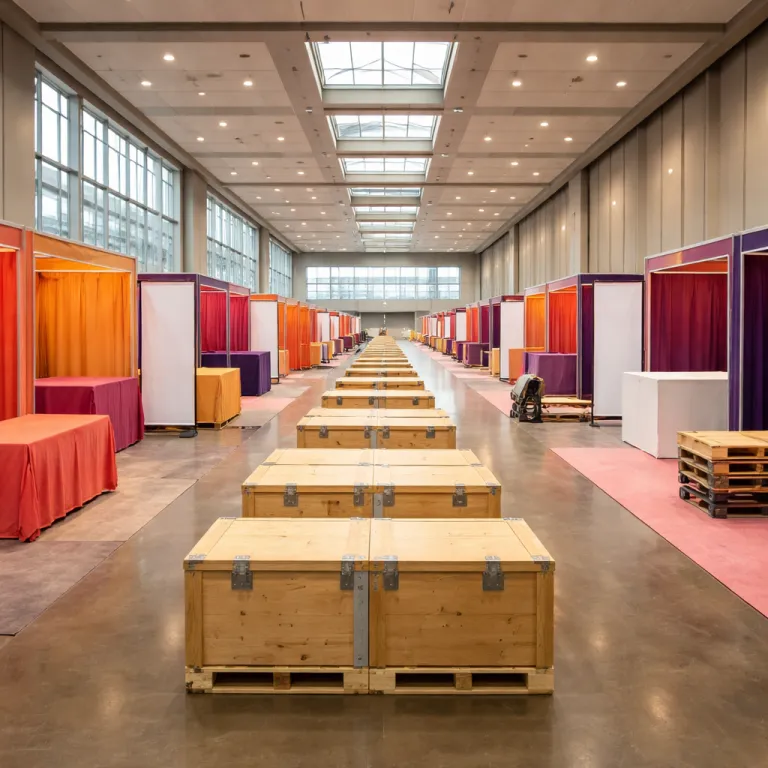
Why your first trade show guide starts ten days before badge pickup
Walking into a major trade show without a plan is the fastest way to waste time. Large B2B events in the United States such as CES in Las Vegas or RSA Conference in San Francisco can host thousands of attendees and hundreds of exhibitors, so an intentional strategy will protect your focus and your budget. Treat this first trade show guide as a working document that you adapt to each new event and to your evolving business objectives.
Industry data shows that exhibitors who invest four to six months in planning their trade show presence generate more qualified lead volume and better post event conversion, and the same logic applies to visitors who prepare with equal discipline. When you attend a B2B marketing expo or a sector specific event marketing summit as a visitor, you are effectively running a one person field operation for your company, so your show planning must align with your wider marketing strategy and sales pipeline. This means defining the business outcomes you want, mapping the right events to those outcomes, and then using a precise show checklist to ensure that every hour on the floor serves those goals.
Think of the trade show as a live market scan where you can benchmark products, pricing, and positioning in real time. A structured visitor checklist will help you compare booth design approaches, evaluate which promotional products actually attract potential customers, and understand how different teams use social media to extend brand awareness beyond the booth space. By the time the doors open, you should know which exhibitors you will visit, which sessions you will attend, and which three conversations you must secure to justify the trip.
Ten day countdown: the visitor preparation checklist that protects your ROI
Ten days before your first trade show, start by clarifying why this specific event matters to your business. Write down three measurable outcomes such as a target number of qualified lead conversations, a shortlist of products to benchmark, or a set of partners you want to meet, because this will guide every later decision. At this stage, review the event marketing materials, floor plan, and exhibitor list, then build a personal show checklist that links each objective to named companies and sessions.
Nine days out, complete your profile in the official trade show app or matchmaking platform with a concise description of your role, your company, and the type of collaboration you seek, and avoid vague language that invites unfocused pitches. Use clear industry keywords, mention the product categories you influence, and specify whether you are scouting vendors, customers, or strategic partners, because this will help the algorithm surface relevant attendees and will help exhibitors qualify you quickly. This is also the right moment to study how other decision makers prepare for complex multi venue events such as the ViennaUP festival, and a detailed guide to key ViennaUP dates for B2B decision makers shows how early planning and structured outreach dramatically improve meeting quality.
From day eight to day five, block calendar time for the event itself and for post show follow up, then secure internal alignment with your équipe and manager. Confirm which competitors, suppliers, or potential customers you must prioritize, and agree how you will share data and insights after the show so that your visit becomes a formal part of your marketing strategy rather than a one off trip. Use this window to request three pre show meetings with exhibitors or peers, because pre booked conversations almost always yield deeper lead generation than ad hoc chats in a crowded aisle.
Profile, outreach, and the three conversations to pre book
Four days before the event, refine your matchmaking profile and outbound messages so they read like a focused business brief rather than a generic networking request. In the profile, state your function, your decision scope, and the specific product or service categories you influence, then add one line on what a successful trade show would look like for you. Leave out internal revenue figures or confidential data, because you want to signal authority without exposing sensitive information that could weaken your negotiation position.
Use the app to identify three types of conversations to pre book before the show opens, starting with one meeting with a current supplier, one with a potential new vendor, and one with a peer from another company in your industry. For each outreach message, reference a concrete reason to meet such as a new product launch, a relevant session you both plan to attend, or a shared challenge like event marketing attribution, because specificity shows respect for the other person’s time. When planning these meetings, study how high intensity conferences such as Google Cloud Next in Las Vegas structure their expo experience, and a practical guide to maximizing a Google Cloud Next free expo pass illustrates how targeted pre show outreach turns a general pass into a curated set of strategic encounters.
Three days out, finalize your personal show marketing toolkit, which should include updated business cards, a short value proposition, and a simple way to capture notes on each lead. Many first time attendees underestimate how quickly conversations blur together, so design a repeatable system that will help you tag each contact by priority, product interest, and next step. This is also the moment to align with your internal sales or marketing équipe on how you will log leads into your CRM after the post event period so that no qualified opportunity is lost.
Floor navigation math, booth strategy, and real time decision making
Two days before the trade show, translate your objectives into a realistic floor navigation plan that respects both distance and cognitive load. On a typical B2B Marketing Expo in Las Vegas with more than one hundred exhibitors and multiple content tracks, a visitor can only have around twelve to fifteen meaningful conversations per day if they also attend keynotes or panels. That means you must choose which booths you will visit with intent and which you will simply scan from a distance for high level market intelligence.
Use the floor plan to cluster target exhibitors by zone, then assign time blocks for each cluster so you avoid criss crossing the hall and losing hours in transit. Prioritize booths where the booth design, product fit, and business relevance align with your goals, and remember that a smaller booth space with a focused message can be more valuable than a large spectacle with little strategic overlap. When you approach a booth, state your role and objective in one sentence, ask one precise question about their products or services, and then decide within three minutes whether this interaction merits deeper engagement or a polite exit.
During the event itself, treat your show checklist as a living document and adjust based on what you learn in real time. If a particular area of the hall yields stronger conversations or better promotional products that resonate with your audience, reallocate time from lower value zones and double down on that cluster. Keep short breaks between meetings to log notes, rate each lead by potential revenue and fit, and capture any insights about show marketing tactics, social media activations, or brand awareness plays that your équipe can adapt later.
From badge to pipeline: the Monday after and long term event value
The Monday after the trade show is where most visitor ROI is either captured or lost. Block at least two focused hours to process every business card, badge scan, and digital contact, then segment them into three groups such as immediate follow up, nurture, and long term watchlist. For each high priority lead, send a short personalized message that references your conversation, clarifies the next step, and proposes a concrete time frame for a call or demo.
Use a simple spreadsheet or your CRM to log key données such as company size, product interest, buying horizon, and any commitments you made during the event. This structure will help your sales and marketing équipe run targeted campaigns, measure lead generation quality, and attribute revenue back to specific events with more confidence. When you review your performance, remember that trade shows are industry specific events for companies to showcase products and services, and early planning allows for better budgeting and reduces last minute issues while clear goals help in measuring ROI and refining future strategies and a well designed booth reflects brand identity and draws attention while staff training enhances engagement and improves lead conversion rates and post show follow up is essential for converting leads into customers.
Within a week, schedule a short internal debrief to share insights on event marketing trends, booth design innovations, and promotional products that genuinely engaged attendees. Compare your experience with other formats such as hybrid or art focused fairs, and an analysis of how a free expo pass at an art on paper fair reshapes B2B engagement shows how unconventional events can still generate serious business outcomes when approached with discipline. Capture what worked in your first trade show guide, adjust your show planning checklist, and treat each subsequent event as an experiment that will help you refine your marketing strategy, sharpen your brand awareness, and turn every future first trade experience into a predictable source of qualified pipeline.
FAQ
How many exhibitors can a first time visitor realistically meet in one day ?
On a large B2B trade show floor, most visitors can hold around twelve to fifteen meaningful conversations per day while still attending a few sessions. This assumes each priority booth visit lasts ten to fifteen minutes plus short transition time between stands. Trying to visit more exhibitors usually reduces conversation depth and weakens lead quality.
What should be on a first time visitor’s trade show checklist ?
A practical show checklist for visitors should include clear business objectives, a ranked list of target exhibitors, three pre booked meetings, and a simple note taking system. It should also cover travel and badge logistics, key sessions to attend, and a dedicated block of time for post event follow up. Keeping the checklist concise but specific makes it easier to execute under time pressure on the show floor.
How early should visitors start planning for a major B2B event ?
While exhibitors often start planning four to six months in advance, serious visitors should begin structured preparation at least three to four weeks before a major event. This window allows enough time to study the floor plan, request meetings, and align with internal stakeholders on priorities. A focused ten day countdown then sharpens the plan and locks in the most important conversations.
How can visitors evaluate whether a trade show was worth the investment ?
Start by comparing your original objectives with the actual outcomes such as the number of qualified leads, partner introductions, or product insights gained. Then estimate the potential revenue or strategic value of those results against the total cost of attendance including travel and time away from core work. Over several events, this consistent review will reveal which shows truly support your marketing strategy and which should be dropped.
What is the best way to handle business cards and contacts after the show ?
Process every business card and digital contact within one business day, logging them into a CRM or structured spreadsheet with notes on context and next steps. Prioritize high value leads for immediate outreach and assign others to relevant nurture tracks or periodic check ins. Fast, organized follow up significantly increases conversion from initial conversation to concrete business outcomes.